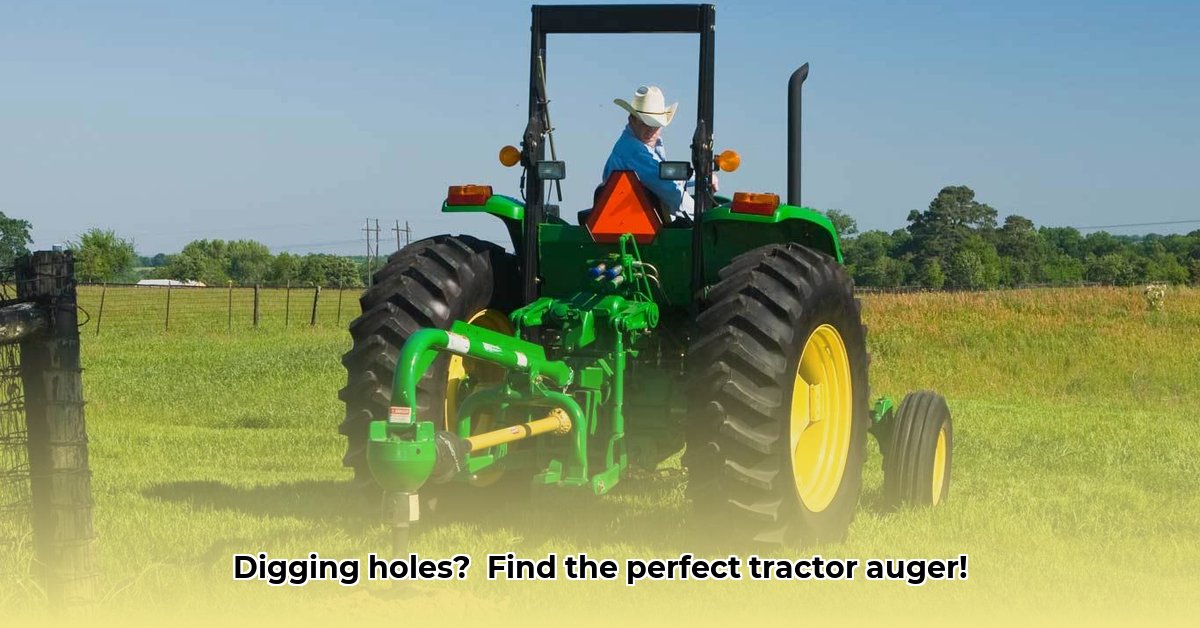
Digging post holes by hand is arduous, but a tractor-mounted post hole digger transforms this backbreaking task into an efficient operation. This guide helps you choose the right digger, comparing popular brands like King Kutter and Everything Attachments, and covering everything from auger size to safety procedures. For more in-depth information on PTO augers, check out this helpful resource. Whether you're a seasoned farmer or a weekend landscaper, this guide provides the knowledge for informed decision-making.
Key Considerations for Choosing a Tractor Post Hole Digger
Selecting the right post hole digger involves several key factors impacting performance, safety, and longevity. Ignoring these could lead to inefficiency, costly repairs, or even injury.
Auger Size and Soil Type
Auger size directly impacts digging efficiency. A larger auger (e.g., 9 inches) is suitable for larger posts and tougher soil conditions, while smaller augers work better for smaller tasks. Clay soil demands a more powerful auger and possibly a lower gear ratio compared to sandy soil. Determining the proper auger diameter is paramount; choosing incorrectly results in wasted fuel and effort. Do you primarily work in clay or sandy soil? Knowing your soil type is the first step to selecting the right auger.
Tractor Compatibility: Power, Lift Capacity, and Hitch Type
Your tractor must meet the digger's requirements. Failure to do so results in damage or ineffective operation.
- PTO Horsepower: The digger's specifications list the minimum PTO (Power Take-Off) horsepower needed. Exceeding this requirement isn't beneficial, but falling short leads to damaged equipment or failure.
- Lift Capacity: The three-point hitch must lift and lower the digger’s weight. Overloading is dangerous.
- 3-Point Hitch Compatibility: Ensure the digger's mounting system matches your tractor's three-point hitch, as variations exist between tractor models.
Understanding these specifications is non-negotiable before proceeding with any purchase.
Gearbox Technology: Torque versus Speed
The gearbox determines how the PTO power translates to the auger's rotation.
- High Torque: Essential for dense soil, offering greater power for slower, more effective digging.
- High Speed: Suitable for easier soil conditions, prioritizing digging speed over raw power.
Many diggers provide multiple gear ratios, enabling adjustment to the soil conditions. Balancing torque and speed is crucial; one isn't inherently superior to the other.
Safety Features: Shielding and Operating Procedures
Safety is paramount. The digger’s design and your operating procedures must minimize risks.
- Safety Shield: A robust shield safeguards against flying debris and accidental auger contact. Never operate without one; it’s a non-negotiable safety measure.
- Safe Operating Distance: Maintain a minimum distance (15-25 feet) from the spinning auger to prevent injuries from unexpected events.
- Personal Protective Equipment (PPE): Always wear safety glasses, gloves, and sturdy boots.
Prioritizing safety prevents potential harm and ensures long-term, risk-free operation.
Step-by-Step Guide to Selecting a Post Hole Digger
- Assess Your Needs: Determine the number of holes, post sizes, soil type, and frequency of use. This guides auger size, gearbox type, and digger capabilities.
- Verify Tractor Specifications: Confirm your tractor's PTO horsepower, lift capacity, and three-point hitch compatibility. Mismatches lead to failure.
- Compare Models: Research models from different manufacturers (Everything Attachments, King Kutter, etc.), considering auger size, gearbox technology, safety features, build quality, and price.
- Read Independent Reviews: Consult online reviews for real-world user experiences and performance insights. Manufacturer claims alone aren't sufficient.
- Analyze Total Cost of Ownership: Factor in the initial purchase price, potential maintenance, and repair costs over the digger's lifespan. A low initial price might not be the most economical in the long run.
- Finalize Your Choice: Select the digger that best balances your requirements, budget, and safety priorities. A well-chosen digger offers years of reliable service.
Comparing Popular Brands: A Preliminary Overview
| Feature | Everything Attachments | King Kutter | Other Brands | Considerations |
|---|---|---|---|---|
| Manufacturing | Often emphasizes US-based manufacturing | Varies; check sourcing information | Varies greatly; research carefully | Impacts quality, warranty, and parts availability. |
| Auger Sizes Available | Wide range typically offered | Range varies; check specifications carefully | Wide variation; compare sizes for your posts | Key factor for digging efficiency and versatility. |
| Gearbox Technology | Specifications usually available | Check carefully; specifications might be limited | Highly variable; some offer multiple gear ratios | Critical for managing power and speed in different soils. |
| Price Range | Varies based on size and features | Varies based on size and features | Significant price differences; compare features | Consider budget and planned usage. |
| Safety Features | Usually includes safety shields | Check specifications; features may vary | Varies; prioritize safety features over price | Safety is paramount. Never compromise. |
Disclaimer: Direct brand comparisons are challenging due to inconsistent information across sources. Always verify specifications directly with the manufacturer. This comparison offers general guidance only.
Maintenance and Troubleshooting
Regular maintenance extends the digger's life.
- Regular Inspection: Check components after each use for wear and tear.
- Prompt Part Replacement: Replace worn parts immediately to prevent cascading failures.
- Proper Lubrication: Follow manufacturer's instructions for lubrication.
- Troubleshooting: Refer to the owner's manual for guidance on common issues; consult a technician for unresolved problems.
Conclusion: Making an Informed Decision
Selecting a tractor post hole digger requires careful consideration of your needs, tractor compatibility, and, most importantly, safety. Thorough research, comparing models, and understanding the key factors described ensure a reliable tool that boosts efficiency and reduces labor. Prioritize safety; it's the most important investment you'll make.